
D&D 5e: Master The Double-Bladed Scimitar With The Revenant Blade Feat
D&D 5e: Master The Double-Bladed Scimitar With The Revenant Blade Feat
SOURCE: Eberron – Rising from the Last War
Rating the Benefits of Revenant Blade
Benefit #1 –
+1 to Strength or Dexterity, to a max of 20
Half an ASI is a great bonus that’s offered by many feats. +1 to Str or Dex boosts either of the relevant combat stats that can be used with the double-bladed scimitar weapon.
Benefit #2 –
While holding a double-bladed scimitar in both hands, gain +1 to AC
Combining the best of both worlds with a strong bonus to combat strength, gaining half the AC bonus of a shield while also increasing effective DPS equivalent to two-weapon fighting.
Benefit #3 –
The double-bladed scimitar is a finesse weapon for a character with this feat
Finesse lets a character use Dex instead of Strength when attacking with a weapon. Many characters, including Rogues, Rangers, and some Bards and Fighters, want to build Dex as their combat stat. The finesse ability is essential for these builds to function.

Mechanics and Requirements
Understanding How Revenant Blade Functions
What is the Double Bladed Scimitar?
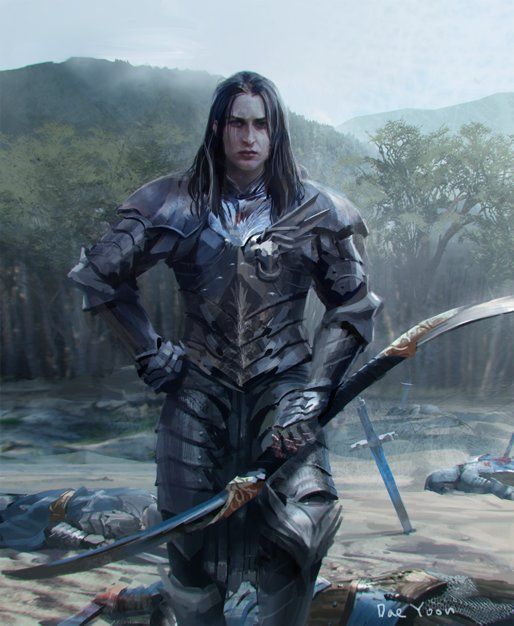
The double-bladed scimitar is a setting-specific weapon, generally exclusive to the Valenar Elves of Eberron.
As a weapon, it straddles the line between one and two-handed weapons and is seemingly designed to work with almost every combat style in 5e.
Backed up by the Revenant Blade feat, a double-bladed scimitar is equally as effective when used by Strength or Dexterity-based characters.
The weapon requires two hands to use, but when paired with this feat, offers a +1 bonus to AC, meaning a character using a double scimitar is slightly tougher than a character using any other two-handed weapon.
Finally, whenever a character takes the Attack action with this weapon, they can make another attack using their Bonus Action. This attack deals less damage (1d4 instead of 2d4) but requires no feat investment in order to use.
That’s a significant bonus, considering all other fighting styles, including two-weapon fighting, and the polearm master and great weapon master feat, need supplementary feats or fighting styles to be completely effective.
What does the Revenant Blade feat add?
The Revenant Blade feat does two things when a character is wielding a double-bladed scimitar:
- The weapon gains the finesse property, which allows the character wielding it to use Dexterity to calculate their attack and damage roll bonuses.
- The weapon gives the wielder a +1 bonus to their AC.
These are significant buffs. First off, finesse opens up the double-bladed scimitar for characters who otherwise can’t use it, primarily Rogues and Rangers.
Secondly, the +1 to your Armor Class is a huge deal. Static bonuses to AC are surprisingly rare in D&D 5e, and it’s common for characters to only gain a point or two of AC every tier they go up (that’s every five levels.)
The +1 to AC goes towards making a character who wields a double scimitar much harder to hurt than an equivalent character with a polearm or two-handed weapon, especially if find ways to further buff their defenses.
Key Stats
The Revenant Blade feat gives a character half an ASI, a boost to Strength or Dexterity by 1, to a maximum of 20.
This is statistically perfect, as any character using this weapon will want to max their Strength or Dex as quickly as possible.
Ideal Characters for Revenant Blade
Top Classes
Rogue – A finesse weapon that has better damage than their other options, as well as a built-in secondary attack to trigger Sneak Attack if the first one misses is literally perfect for a melee Rogue.
Pair this with the Swashbuckler subclass for best effect; a Rogue that can always drop Sneak Attacks no matter the combat situation.
Ranger – Rangers tend to love two-weapon fighting. It’s been a core part of the class’s identity since it was first written. The double-bladed scimitar is just two-weapon fighting but better.
The fact that this feat gives the weapon the finesse property is even stronger, allowing a Ranger to stack Dex for a better AC, and the ability to cleanly shift between ranged and melee weapons as the situation dictates, just as an elf should.
Cleric – Strange as it sounds, the Cleric is genuinely fantastic at swinging around a crazy double-ended sword.
Many Cleric classes gain bonuses to martial combat, including a flat bonus to damage at level 8. The Cleric also tends towards being a tank, so really appreciates the +1 to AC. A Wood Elven Cleric with boosted Dex and Wis is the obvious play here and works with any subclass.
Bear in mind that melee cantrips like Booming Blade do not qualify for the bonus attack of Revenant Blade, as that only triggers when you take the Attack Action.
Warlock – If you’re looking to build a melee Warlock that for some reason isn’t taking the Hexblade subclass, Revenant Blade is the next best thing.
Between being able to use Dexterity to attack and deal damage, as well as boost AC to non-glass cannon levels, the bonus action attack that can trigger multiple class abilities, and the best in class damage dice for a weapon of this kind, it’s a surprisingly effective build that will keep up with dedicated damage dealers, while still having some solid casting power.
Race or Subrace Choices
The Revenant Blade feat is only supposed to be taken by those with the Elf racial heritage, as it’s tied to the lore of the Valenar Elves in Eberron.
Any kind of Elf qualifies, including Half-Elves. It’s also worth talking to your GM about weapon proficiencies, as the double-bladed scimitar is a martial weapon, and some classes that want to use it might not automatically have proficiency.
We think it’s reasonable to suggest that any Elf should gain proficiency in the double-bladed scimitar as part of their Elven Weapon Proficiency racial trait, especially if you’re willing to invest feats into the build. Again, though, these aren’t rules as written. Always talk to your GM.
Combos, Tactics, and Synergies
Complementary Feats
Elven Accuracy – Do you like attacking with advantage? Do you like rerolling dice so you never ever miss an attack? Are you an elf? Take Elven accuracy.
Magic Initiate – Grab Hex for a significant boost in damage once per day, plus a pair of cantrips.
Spells that Synergize
Hex/Hunter’s Mark – Flat 1d6 bonus damage on every attack that lands. A character with the Revenant Blade feat makes a lot of attacks. That’s a lot of bonus damage.
Elemental Weapon – Similarly to the above, bonus damage on every attack. Elemental Weapon lets a character shift their damage typing, and also makes the weapon magic, with a +1 to hit and damage rolls.
Bless – One of the strongest level 1 spells in 5e, Bless boosts a character’s saves and attack rolls by 1d4, increasing the chance of every attack landing by as much as 20%.
Strategies for Maximizing Revenant Blade Effectiveness
Which Fighting Styles work with Revenant Blade?
The double-bladed scimitar is a pretty odd weapon, as many of the standard fighting styles don’t work on it.
If you’ve taken a class that gets a fighting style (typically Fighter, Ranger, and Paladin) here are the two options that offer actual synergy, neatly divided into defensive and offensive bonuses.
Defense – The defensive option. Another +1 to AC stacks with the bonus already granted by the Revenant Blade feat, pushing the character’s AC to the level it would be with a shield and one-handed weapon.
Great Weapon Fighting – The offensive option. To qualify for this style, a character needs to be holding a weapon in both hands. The double-bladed scimitar qualifies.
Its bonus is very strong, allowing a character to reroll and dice that show a 1 or 2. On a weapon that rolls 2d4, that potentially lets a character reroll the lowest 50% of damage rolls they make.
Realistically, you should only use this to reroll every damage roll of 1, as there is only upside. Either you roll another 1, the same damage value, or there’s a 75% chance of rolling higher.
Rerolling your 2s instead has a 25% chance of lowering the overall damage, per dice. That’s not good odds.
Final Thoughts on Revenant Blade
Revenant Blade is a strong feat, with a really easy path to whether it’s recommended for your character.
Are you playing some sort of Elf with a melee build? Is the double-bladed scimitar available in your campaign?
If the answer to both of those is yes, you might genuinely consider taking this feat. It’s strong, flavorful, and adds an interesting and fun combat dynamic to a character that offers a great balance of damage, defense, and most importantly, flair.