
D&D 5e: Just Roll High. A Guide To The Lucky Feat
D&D 5e: Just Roll High. A Guide To The Lucky Feat
Rating the Benefits of Lucky
Benefit #1 –
Gain 3 luck dice. These dice can be added to rolls, before or after that dice is rolled, and can also be used on enemy attack rolls
This feature allows high-risk, high-reward damage dealing, particularly potent when the odds of hitting are high, but risky if a hit is crucial.
Mechanics and Requirements
Understanding How It Functions
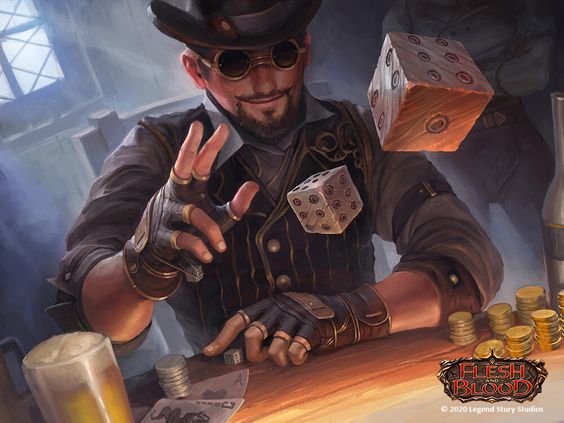
The Lucky feat does one thing. But it’s such a powerful thing that the feat is almost always found at the top of every feat rating list, even 10 years after its release.
Here’s how it works: At the start of every day, a character with this feat gains 3 Luck dice.
A Luck dice can be spent on any attack roll, ability check, or saving throw a character makes. They can also be spent to oppose an attack roll made against the character by another creature.
This is a massive list of benefits, encompassing essentially everything a character does with a dice that isn’t rolling for damage.
Things Lucky can be used on include:
- Attack rolls with weapons and spells
- Skill rolls
- Initiative (it’s a Dex ability check)
- Essential saving throws
- Enemy attacks (especially useful if the enemy rolls a critical hit because they take the lowest of the two dice. Yes, Lucky can turn a crit into a miss.)
This is already powerful enough, but Lucky is pushed over the edge by two things.
- Luck dice can be spent after the roll is made, ie, after you know what you’ve rolled and can probably estimate whether you’ve passed or failed the check.
- Luck dice stack with advantage. This is one of the only ways that a character can roll three dice for a check in 5e.
All Luck dice come back on a long rest. There is currently no other way to refresh them because a character who could stack multiple uses of the Lucky feat every single day would be unstoppable.
Key Stats
Lucky needs no stats to function, and offers no stats to a character. Build whatever you want. You’re Lucky. It doesn’t matter.
Ideal Characters for Lucky
Top Classes
We’re going to take a step away from our standard guide protocol here, and not recommend specific classes.
The reason’s simple. Lucky is great for literally every single class and build in the game. No matter the character, the Lucky feat is both generally useful and incredibly powerful.
Doesn’t matter what you’re playing, you can be confident that Lucky is going to push your build up a notch, and always feel impactful at the table.
Race or Subrace Choices
Halfling – Imagine being able to reroll every 1 you ever roll, as well as add another dice to rolls you can’t afford to fail. Any Halfling is great with this feat. For even more fun, take the racial feat, and let your allies also reroll 1s!
Kenku – Why not just give yourself advantage on skill checks multiple times per day, plus a bunch of supplementary benefits around subterfuge and mimicry? 5e’s crow people are great at skills. Lucky makes them better.
Hobgoblin – Boost rolls by up to +3, after rolling, multiple times per day. Plus Help allies as a bonus action, to smooth out the entire party’s probability curve.
Combos, Tactics, and Synergies
Complementary Feats
There aren’t any feats that directly synergize with Lucky, because what it does stands alone.
With that said, it’s also not strictly true. Because Lucky synergizes with every feat. Doesn’t matter what you’re building, and which other feats you decide to take. Lucky’s gonna make them consistently better and more reliable.
Great Weapon Master? Sure, now you can push that important attack through by rolling more dice than is strictly necessary.
Dropping Elemental Adept Metamagically enhanced Fireballs everywhere? Did you want to win initiative, always go first, and reduce half of every encounter to a crater full of gently smoking boots? Of course, you do.
Trying to persuade a dragon to hand over a key piece of treasure from its hoard? Well, that sounds dangerous. You better roll three dice to make sure.
Lucky is consistently awesome. There are no bad situations for it.
Spells that Synergize
Silvery Barbs – Oh man, did you want your enemies to have to roll three dice and pick the lowest when attacking, then throw advantage at another member of the party, just to sweeten the deal? Silvery Barbs is just as broken as Lucky. Using both sounds kind of unfair.
Guidance – Add another 1d4 to a roll, with the option to add it after seeing the results. The timing on this allows a character to choose to use Lucky or Guidance first, whichever one is better.
Strategies for Maximizing Your Luck
Understanding Timing
It’s generally always better to use the Lucky feat after you roll, because a high roll on your initial D20 literally wastes a use of the feat, and there’s no downside to using it as a backup on low rolls.
Where timing is incredibly important is this: Where a Lucky roll is being used alongside other buffs.
Consider the Guidance spell, which adds a 1d4 boost to a skill roll, and can also be used after a roll is made.
So a character might choose to throw all of their dice at once, rolling two dice for Lucky, and adding Guidance to whichever one is highest.
But it’s far better to roll that first dice, add Guidance if there’s a good shot (>50%) of getting the result you need, and if not then use a Luck dice, adding Guidance to that one instead if the result is better.
The short answer is this: If you can adjust rolls after the fact, always wait until the last possible moment to use a Luck dice on a particular roll.
May the odds be ever in your favor
There are so many ways to mess with dice rolls in 5e. It makes sense, after all. D&D is a game of chance and probability. So the more a party can stack odds in their favor, the better.
Some example ways to do this include:
- The Bard’s Inspiration feature, and the plethora of ways it can be spent
- The Divination Wizard’s Portents, which guarantees a set result twice per day
- Advantage on rolls, and the million ways of getting it
- Spells like Silvery Barbs, that force enemy rerolls
The more of these you can pile atop one another, and the more often you have them available, the better your party’s chances of succeeding on every roll they make. Just be careful. While succeeding on everything sounds fun, it’s either going to end up in a kinda boring, power fantasy campaign where the party walks every threat or a GM that just keeps escalating, until someone gets exploded out of existence.
Final Thoughts on Lucky
Lucky is an incredibly strong feat. Being able to add dice to rolls, after seeing the results, is a very unique ability in 5e.
The single best thing about the feat, though? How generally useful it is. No matter what the party is doing, Lucky will find a way to contribute, and you’ll use the rolls at least once every time you sit down to play.
There’s a reason Lucky finds its way to the top of every feat rating list ever published in 5e. It’s incredibly powerful, and there is no character it can’t make stronger. Long story short, if you haven’t taken the feat yet, try it. You won’t be disappointed.