
D&D 5e: Never Be Surprised Again With The Alert Feat
D&D 5e: Never Be Surprised Again With The Alert Feat
SOURCE: Player’s Handbook
Rating the Benefits of Alert
Benefit #1 –
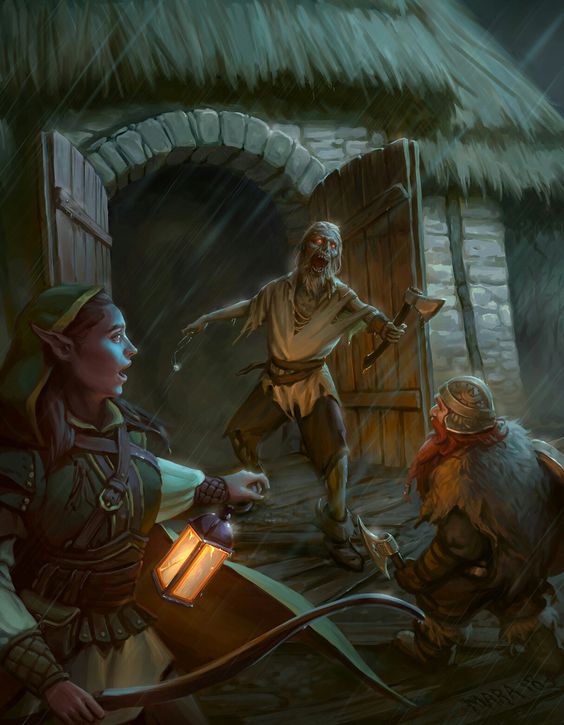
A character with the Alert feat can’t be surprised while they’re conscious
Surprise prevents a character from acting in the first
round of combat. A surprised character, or worse, a surprised party, is a serious problem.
This feature entirely prevents surprise from being a thing. No rolls, no uses per day. It just works. While surprise doesn’t come up that often in campaigns, when it does this will save a character’s life.
Benefit #2 –
Gain a +5 bonus to initiative
Ask any seasoned player of 5e (or real life) how to win a fight, and you’ll hear the same piece of advice over and over. Hit first.
+5 to initiate is a huge bonus. Equal in size to the highest standard initiative bonuses available to characters through Dex, as well as most of the other initiative bonuses a character can grab via class bonuses.
Benefit #3 –
Creatures that are unseen by you no longer gain advantage on their attacks
Another situational bonus, but one that’s incredibly effective in multiple situations, and for many characters. Advantage is a powerful ability that massively increases the combat effectiveness of a character. Being able to switch it off, even in a limited situation like this one, is great.

Mechanics and Requirements
Understanding How Alert Functions
How Initiative Works
In Dungeons and Dragons 5e, initiative is surprisingly simple to understand.
Initiative is a d20 roll that every creature makes at the start of a combat encounter. Normally, the only thing a creature adds to their initiative roll is their Dexterity modifier, which can be positive or negative.
Once every creature has rolled initiative, creatures act in initiative order, from highest to lowest. The order doesn’t change from turn to turn.
This means the standard initiative bonus for creatures in the monster manual hovers between +0 and +5, with an average of +2 to +3. So taking the Alert feat, with its +5 bonus, already puts a character ahead, without even adding their Dexterity bonus.
Alert, Surprise, and You
Surprise is one of the oddest rules in 5e. In short, it works like this. In the first round of combat, if anyone was surprised, ie, if their enemies got the jump on them through an ambush or some equivalent, they lose their turn.
Surprise doesn’t come up often. But when it does, it tends to go pretty badly on the part of the creatures that have been surprised. We’re talking about eating an entire round of combat without being able to fight back.
The Alert feat stops that from happening. A character with the feat cannot be surprised. Ever. Somehow, the feat has made them immune to surprise, whether that’s by the goblin hiding in a bush that just threw a rock at you, the lich that’s been invisibly shadowing the party for a week, or the secret birthday party your friends spent several hours planning. Sorry about that last one.
Dodging Hits You Can’t See
The last part of the Alert feat is preventing enemies whom a character isn’t aware of from gaining advantage on attacks.
This covers a surprisingly wide variety of use cases. The most obvious are enemies who have invisibility. Suddenly, enemies with invisibility gain no bonuses on attack rolls against you, and that can be a huge benefit.
Other times this is useful might include:
- Enemies that are hidden through stealth, whether that’s a volley of arrows launched in the first round of combat, or a goblin scampering from around a corner.
- A character having their sight removed due to darkness spells like fog cloud, or the blindness condition.
Please bear in mind this doesn’t entirely stop an enemy from gaining advantage against you. It only prevents advantage in situations where that advantage is gained because your character cannot see them.
Key Stats
The Alert feat doesn’t have any stat requirements necessary for use.
It’s worth pointing out that Initiative does build off of Dex. Many characters are going to want to have at least a few points in Dexterity to help boost AC and essential saves.
Ideal Characters for Alert
Top Classes
Wizard – Wizards are the quintessential “control” class, who use their spells to shape the flow and tempo of an encounter. Or, y’know, just blow everyone up with giant flame explosions
Making sure to absolutely go first is one of the best ways to control the battlefield, as it allows the Wizard to pick out key targets and hit enemies before they even get to act.
Amusingly, the class even has an archetype that leans harder into this. The War Wizard and Chronurgist subclasses gain a second bonus to initiative equal to their Int modifier, which you’re obviously going to be boosting. This pushes their total bonus to a potential +15, which nearly guarantees the all-important first action.
Cleric – Laying down big buffs on the party can significantly boost their effectiveness. Even a simple Bless spell, despite being level 1, increases the efficiency of every attack and saving throw the party makes by as much as 20%.
As a naturally tanky class, the Cleric also comes with a second consideration. Locking down the battlefield with control spells and their own body. While the Cleric isn’t a primary combat character, standing in front of their allies, hammer in hand, is something the class is incredibly good at.
Barbarian – Out of every pure melee class, the Barbarian wants to go first the most, for a pair of major reasons.
The first is Rage. The quicker the Barbarian can get its primary buff online, the bigger a target it makes itself, while paradoxically also taking less damage from its built-in resistances.
The second reason is positioning. The Barbarian wants to be where the enemy doesn’t want it, and that’s generally right in the enemy’s face. Being able to get into position turn 1, before anyone else acts, lets the class apply a ton of threat pressure simply by existing, and that’s precisely what they want to do.
Race or Subrace Choices
Variant Human – Pick up the Alert feat from level 1, add your Dex bonus, and then go on to win almost every initiative roll ever.
Harengon – Adding their proficiency bonus to the roll basically doubles a character’s initiative check at every level of the game. It helps that the Harengon gets some great bonuses that work well for almost every class and build in 5e.
Combos, Tactics, and Synergies
Complementary Feats
Observant – Notice every little detail around you, including every ambush, every secret door, and every combat encounter, before your Alert feat kicks in.
Spells that Synergize
Enhance Ability – Initiative is a Dex check. Enhance Ability lets a character gain advantage on checks for a particular stat for up to an hour. If you know a big fight is coming, this spell makes it trivial to gain advantage on initiative.
Foresight – Yes, you have to get to level 17 to cast this, but Foresight is basically an “I win” button for the character lucky enough to have it cast on them. Advantage on basically every roll is crazy powerful, and easily balances against the flashier 9th-level spells that explode entire villages.
Strategies for Maximizing Alert Effectiveness
How much initiative is too much?
For the vast majority of creatures in the monster manual, their initiative roll is going to be based entirely on their Dex score.
Many creatures, especially at lower levels, don’t have the greatest Dex bonus. A standard Goblin has a Dex bonus of +2, so gets +2 to their initiative roll. And a mundane zombie has a -1 to their Dex score!
This doesn’t change much as you level. For example, Adult Dragons have a Dex bonus of +0, so roll a d20 for initiative, with no bonuses.
That means a character with 20 Dex and the Alert feat, with their +10 bonus to initiative, the chance of beating an individual monster’s initiative score is higher than 50%. It’s possible at that point to roll high enough that nothing else in the encounter can conceivably beat your initiative score.
This also means that a character who can somehow gain another +5 to their initiative, pushing their bonus to a mighty +15, is almost certain to win any initiative roll that matters.
With that said…
How to Boost Initiative Even Further
Like almost everything in 5e, if you’re choosing to spend some of your build’s power budget on initiative boosts, it pays to specialize. Here’s the current list of ways to boost your initiative:
Initiative bonuses
- Increasing Dex – Your base initiative bonus is your Dex bonus, so more points here from ASIs or magic items are the simplest way to grab a boost.
- The Bard’s Jack Of All Trades ability adds half of the class’s proficiency bonus to their initiative, which means +1 to +3, depending on the level.
- The Champion Fighter’s Remarkable Athlete ability adds half of the class’s proficiency bonus to initiative checks and a whole bunch of other physical rolls.
- The Gloomstalker Ranger adds their Wisdom bonus to their initiative from level 3.
- The Swashbuckler Rogue adds their Charisma bonus to their initiative from level 3.
- The Chronurgy and War Wizard subclasses both add their Intelligence bonus to their initiative from level 2.
- The Harengon race adds their full proficiency bonus to their initiative at all times.
- The Artificer’s Flash of Genius ability allows the class to add their Intelligence bonus to an ability check after it’s rolled, multiple times per day. Initiative rolls qualify for this and actually let the Artificer boost their ally’s initiative, as well as their own.
- Scorpion Armor gives a character +5 to initiative, as well as other bonuses if they can 1. Find a set, and 2. Wear it without it killing them.
Advantage on initiative
- The Enhance Ability (level 2) and Foresight (level 9) spells both let a character take their initiative checks with advantage.
- The Barbarian’s Feral Instinct feature, available at level 7, offers permanent advantage on all initiative rolls.
- The Sentinel Shield magic item does this as its unique magical ability.
Other bonuses
- The Guidance spell adds 1d4 to an ability check, which includes initiative. While you might not be able to apply it for every fight, remember this if the party has prep time for an encounter.
- The Luckstone magic item gives a character +1 on all ability checks; initiative included.
- The Gift of Alacrity 1st level spell boosts a character’s initiative rolls by 1d8 for 8 hours, though some GMs might not allow it in their campaign.
Initiative and Lair Actions
As your party levels up and fights stronger foes, it’s common to start seeing lair actions as part of encounters.
Lair actions typically take place at a fixed initiative step 20, which is good, as it lets a party plan around their effects and the turn order.
It’s also good as a character with a decent Dex score and the Alert feat has a solid chance of beating an initiative score of 20. This lets a character with high initiative act before any lair actions go off, applying pressure to an enemy that it might typically have to spend lair actions mitigating.
The Alert feat as DPS
If your role in the party is dedicated damage dealer, for example, a Rogue or Fighter, then going first is probably not essential.
The main reason for this is target priority. Most strong enemies either aren’t going to go down to one round of combat damage from most characters, unless your build is giga broken or you roll the hottest dice known to man and crit with everything.
On top of this, in many encounters, the squishy, vulnerable enemies that a character might be able to drop in one good round are going to be standing further back, out of the way.
For most DPS characters, the first turn is a time to stage and position, ready to leap into action on subsequent turns. Abilities and boosts might be used, as could ranged weapons to chip away at HP totals.
Still, going first is never bad, especially when facing one or two big single enemies. The quicker a party can start stacking damage, the quicker an enemy falls, so the quicker an encounter is over and the fewer resources a party has to use.
On top of this, the secondary benefits of the feat, namely, avoiding surprise and not giving away advantage to enemies that you can’t see, are things DPS classes love. Never be afraid to grab the Alert feat if there’s space in your build for it.
The Alert feat as a tank
Many naturally tough, front-line characters love going first for two huge reasons.
The first is disruption. Bruisers want to be in the thick of things, surrounded by enemies, providing a target that can and should be taking hits.
Tough characters also tend to have abilities that can lock down portions of the battlefield, either by applying conditions like Frightened to key opponents or by using feats like Sentinel and Polearm Master to attack enemies who try and move past the area that they’ve planted themselves in.
The second important consideration is defenses. Many tanky characters have innate defensive abilities that have to be activated or are far more useful when applied to the correct target. A great example of this is the Path of the Ancestral Guardian subclass, which can force disadvantage on the attacks an enemy makes if it gets to hit it first.
Classes with abilities like these want to go first to ensure that they act before the enemy they’re targeting, so they can better do their job and prevent enemies from acting properly.
The Alert feat as a spellcaster
If any class wants to go first, it’s the spellcasters. Nothing changes the flow of an encounter faster than high level AOE spells.
The first option is damage. For example, dropping a fireball on a cluster of opponents and blasting away a significant chunk of their HP. The rest of the party is going to find it much simpler to deal with enemies when they can step into the falling ashes and kill already weakened targets.
The second option is buffing allies. That might look like laying down key buffs, as we already mentioned earlier with Bless. It could also be applying encounter specific abilities, like elemental resistance against a Dragon, or a magic weapon for parties fighting the undead.
Lastly is control. This normally looks like picking the strongest enemy or another relevant target, and then hammering it with a disabling spell that prevents that foe from acting in any appreciable manner. A spellcaster that’s been hit by Silence, or a Blinded or Restrained melee monster, are great examples of this.
This already makes the Alert feat great for primary spellcasters. But the secondary benefits push it over the edge. Firstly, acting in the surprise round can utterly shut down certain encounters. A bandit ambush tends to go… less successfully when the Sorcerer spins, eyes glowing then immolates half their gang before any of them even fire a shot.
Casters also tend to be low on both HP and AC, which makes giving up advantage on attack rolls really really bad. A way to avoid this, even niche as it is, adds to overall survivability. It’s a good feat. If you can fit it into your build, you probably should.
Final Thoughts on Alert
Alert is a great feat. The primary bonus is incredibly useful on basically anyone, and you’re going to feel the impact in almost every encounter the party has.
Adding to that, while the supplementary benefits are a little niche, they are just as good when they come up.
Alert was a winner when it was published a decade ago. It’s still a winner now.